


AOC Palapreg Low-Density SMC for Lightweight Autonomous Delivery Vehicles
 Oct 15, 2026|
 View:17

Hello, I'm Chris, the leader of the VE Expert Bank at Evergreen Chemicals and a senior consultant for the AOC brand. With extensive experience in composite molding processes and resin systems, particularly vinyl ester technologies, I help customers evaluate material solutions based on application requirements, manufacturing conditions, and performance targets. My work also includes developing customized formulations for specific processing and end-use needs.
Autonomous delivery vehicles present an interesting challenge for composite manufacturers: exterior components must combine low weight, reliable surface quality, and compatibility with onboard communication and sensing systems, while remaining economical to produce.
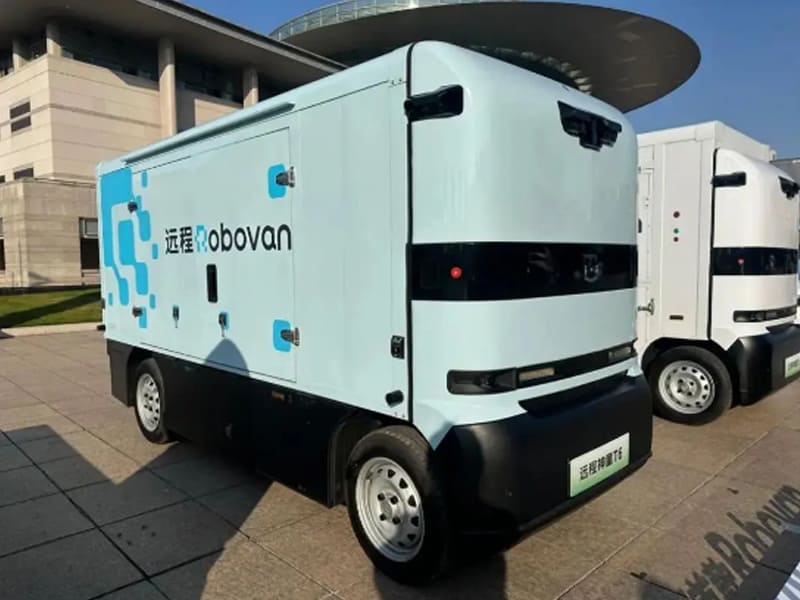
AOC’s reported application of its Palapreg® Series-based low-density SMC solution in the Shentong T6 Robovan offers a practical example of how resin technology, formulation design, and supply chain collaboration can address these requirements.
Chris
VE ExpertThe Challenge: Building Lighter and More Durable Yacht Structures
In January 2026, the Shentong T6 series, a Robovan model under Geely’s Farizon New Energy Commercial Vehicle business, was officially launched for applications including industrial parks, campuses, urban public roads, and express delivery station connections.
According to the supplied AOC case information, AOC worked with SMC sheet suppliers and exterior component suppliers to deliver lightweight body panels and high-quality exterior parts using a Palapreg® Series-based resin solution.
For these vehicles, exterior component development involves several connected priorities:
- Reducing component weight
- Meeting mechanical and dimensional requirements
- Achieving consistent exterior appearance
- Accommodating communication and sensing requirements
- Controlling manufacturing and finishing costs
From my perspective, the material selection process should begin by defining how these priorities will be measured in the finished component.
Low-Density SMC: From 1.9 to 1.5 g/cm³
One of the key results reported in this application is a reduction in SMC density from approximately 1.9 g/cm³ to 1.5 g/cm³.
The formulation uses hollow glass microspheres to replace part of the conventional calcium carbonate filler. This creates an opportunity to reduce weight while managing the overall formulation cost.
The reported density change represents a reduction of approximately 21%. For the same component volume, that would correspond to a similar reduction in material weight. Actual finished-part savings depend on geometry, thickness, and structural design.
When evaluating this type of solution, I would consider density alongside molding behavior, mechanical performance, surface quality, and production cost. Together, these factors determine whether the formulation is suitable for the application.
Class A Surface Quality: Supporting More Efficient Finishing
Weight reduction must be achieved alongside the required exterior appearance.
The supplied case describes how AOC’s Class A surface resin system helped address the risk of surface deterioration associated with reduced calcium carbonate content. It supported the control of short-wave surface irregularities and rib read-through while accommodating hollow glass microspheres.
For this application, AOC reports that the molded exterior components could proceed to subsequent finishing without a sanding step, helping reduce corrective work and coating defects.
This is an important consideration in material development. A lighter molded part becomes more valuable when its surface quality also supports an efficient finishing process.
Low Dielectric Characteristics: A Functional Consideration for Smart Vehicles
Autonomous delivery vehicles introduce additional requirements for exterior materials because of their onboard communication and sensing systems.
The AOC case identifies low dielectric characteristics as one of the benefits of the SMC solution, supporting low-loss signal transmission through relevant exterior components.
From my perspective, this characteristic should be evaluated at the component and system level. Signal performance depends on factors including:
- Operating frequency
- Material composition
- Panel thickness
- Paint and coating systems
- Antenna or sensor location
A representative panel assembly should therefore be tested under the intended operating conditions. Early coordination between material suppliers and vehicle system engineers can help establish the appropriate validation requirements.
Bringing Commercial Vehicle Experience into a New Application
For this luxury catamaran hardtop project, two structures measuring:
The supplied case notes that SMC is already used in exterior components across Farizon’s light-, medium-, and heavy-duty commercial vehicles.
This manufacturing experience provides a foundation for its use in autonomous delivery vehicles. Established material and molding knowledge can inform the development of new panels, tooling, and production processes.
However, every vehicle platform has its own requirements. Component size, production volume, operating environment, and functional integration all need to be reviewed for the specific project.
I would begin with a clear application brief, followed by material screening, molding trials, and finished-component validation. This gives each supply chain partner a shared basis for assessing progress.
Supply Chain Collaboration Makes the Solution Practical
The Robovan application also highlights the importance of collaboration between the resin supplier, SMC sheet manufacturer, and exterior component producer.
Each contributes to the final result:
- Resin technology supports processing and surface requirements.
- SMC formulation combines the resin, reinforcement, fillers, and other ingredients.
- Tooling and molding conditions shape the finished component.
- Finishing and inspection confirm the required exterior quality.
Reviewing these elements together helps identify where adjustments will have the greatest practical benefit.
For customers developing lightweight composite components, I encourage technical discussions early in the project, when material and process choices can still be evaluated together.
Chris’s Perspective: Evaluate the Complete Composite SolutionThe AOC Palapreg® low-density SMC application demonstrates a development route for autonomous delivery vehicle exterior parts that combines weight reduction, surface quality, and functional integration.
My core specialization is vinyl ester resin systems, but the evaluation principle applies across composite technologies: understand the service requirements, match the material to the manufacturing process, and validate the finished component.
At Evergreen Chemicals, I work with customers to translate application needs into focused material and processing discussions. Whether the priority is lightweight construction, corrosion resistance, or production consistency, a clearly defined technical target is the starting point for a useful recommendation.



Recent News
1.Expert training of AOC helps improve skills
2023-05-172.AOC Europe Launches High Performance Carbon Fiber SMC Solution
2023-07-193.Deep technological accumulation——AOC
2023-10-314.Mr. Yan Zhenghua, AOC Director, visited Evergreen Chemicals with a delegation to jointly paint a new chapter in the global high-end resin industry
2024-01-155.AOC Resins Used in Corrosion-Resistant Project at Ningde-Bangpu Battery Industrial Park
2024-01-246.AOC Visits Evergreen Chemicals for Year-End Review
2025-01-147.Evergreen Chemicals Welcomes AOC Leadership Team Visit
2026-01-168.Evergreen Chemicals Attends AOC Resins 2026 Distributor Training in Nanjing
2026-04-299.AOC Palapreg Low-Density SMC for Lightweight Autonomous Delivery Vehicles
2026-10-15


